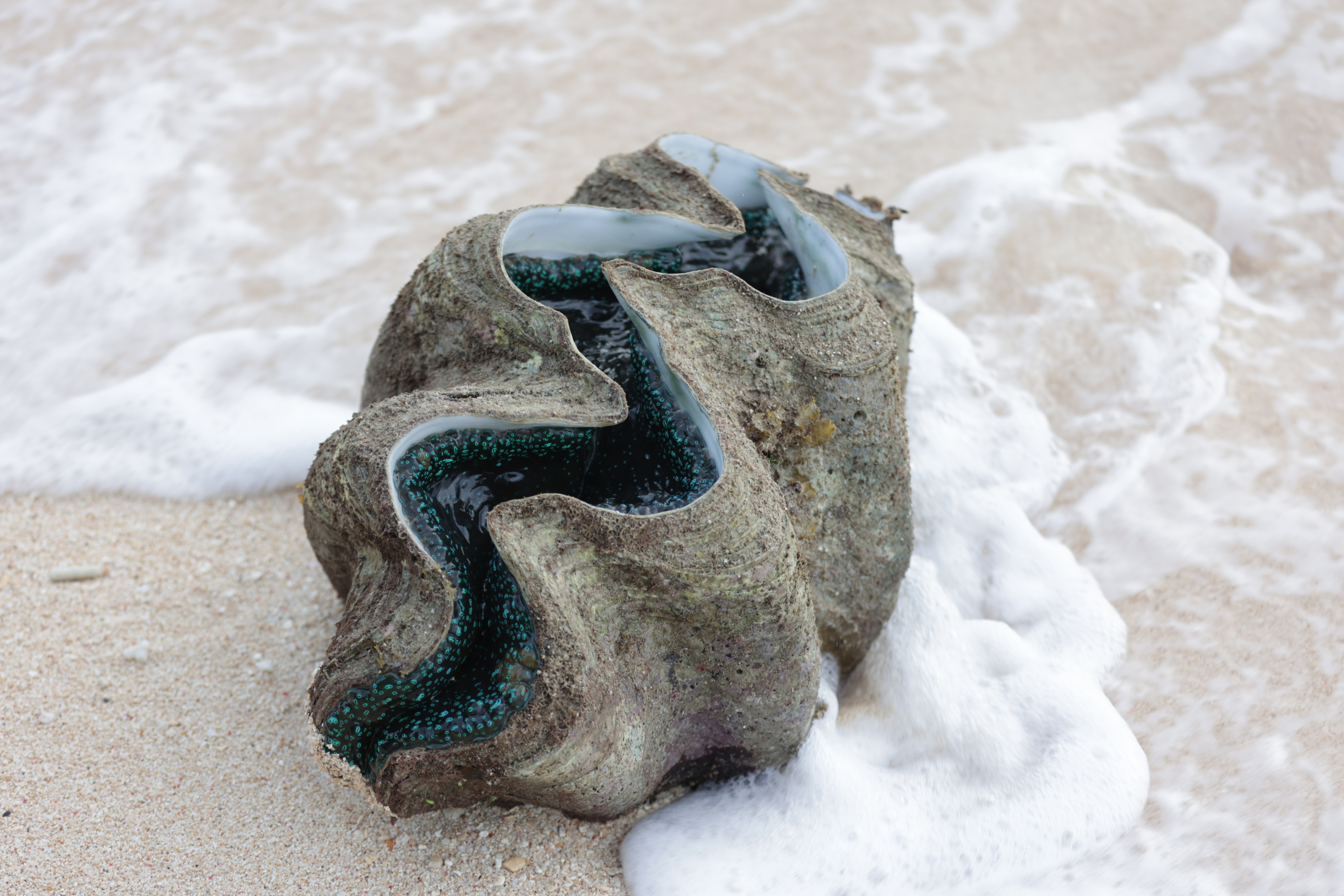
Scientists regard giant clams as one of the ocean’s most vital marine species because of the many roles they play in protecting marine and coastal ecosystems. They serve as food producers, filter feeders, and shelter for dozens of other sea life. Giant clams are often regarded as keystone species because their presence helps sustain biodiversity and their absence can disrupt ecological balance, while their sensitivity to environmental change also makes them living indicators of an ecosystem’s health and stability.
Recognizing their ecological importance, Semirara Mining and Power Corporation (SMPC) established the Semirara Marine Hatchery and Laboratory (SMHL) in 2010. Today, it remains the only privately managed facility in the Philippines dedicated to giant clam breeding, propagation, and coral reef rehabilitation.
How giant clams promote sustainable fishing
Beyond their striking appearance, giant clams play a crucial role in sustaining local fisheries. By creating a stable habitat that offers both food and protection, they attract fish and encourage breeding. As fish populations grow around clam-rich areas, reef biodiversity increases, benefiting coastal communities that depend on fishing for their livelihoods.
“Before our efforts here, residents harvested giant clams for food. But thanks to community education and outreach activities of SMHL, our fishermen are now aware of the benefits that giant clams provide both to their environments and livelihoods,” said Alexander L. Layos, aquaculturist at SMHL.
He added that giant clams are highly sensitive to pollution, making them reliable indicators of marine health. When giant clams thrive, it signals clean waters and productive habitat conditions that also support a sustainable fishing industry. Through partnerships with local volunteers and communities, SMHL continues to strengthen conservation efforts that help preserve Semirara Island’s marine biodiversity.
Propagating clams in SMHL
SMHL hosts all eight species of giant clams found in the Philippines, including the endangered True Giant Clam (Tridacna gigas). To date, the facility has successfully propagated 191,000 giant clams, with over 81,000 reintroduced into Semirara’s reefs to help restore marine habitats.
SMHL also supports conservation initiatives in Barangay Alegria and Tinugboc in Semirara, as well as partner groups in Palawan and Batangas, and the Department of Environment and Natural Resources, through the provision of clams for propagation and reef rehabilitation programs.
With their scientific and ecological importance, giant clams have become closely linked to ocean conservation. Through research, community engagement, and habitat restoration, SMHL continues to support efforts that help these marine species and their ecosystems thrive for generations to come.


 Back
Back